Runoff Controlled Before Property Damage Starts
Drainage Solutions and Water Management in Naches for properties experiencing foundation water intrusion, surface erosion, or standing water problems
Snowmelt from the surrounding Cascade foothills combined with spring precipitation creates seasonal runoff volumes that overwhelm inadequate drainage systems and saturate poorly graded properties throughout Naches. All Valley Land Management & Excavation installs drainage infrastructure and reshapes terrain to intercept water before it reaches structures, direct flow away from vulnerable areas, and prevent soil saturation that undermines foundations or creates muddy, unusable ground. You see drainage problems when basement walls show moisture staining, crawl spaces flood during runoff events, driveways develop washout gullies, or yard sections remain waterlogged weeks after storms.
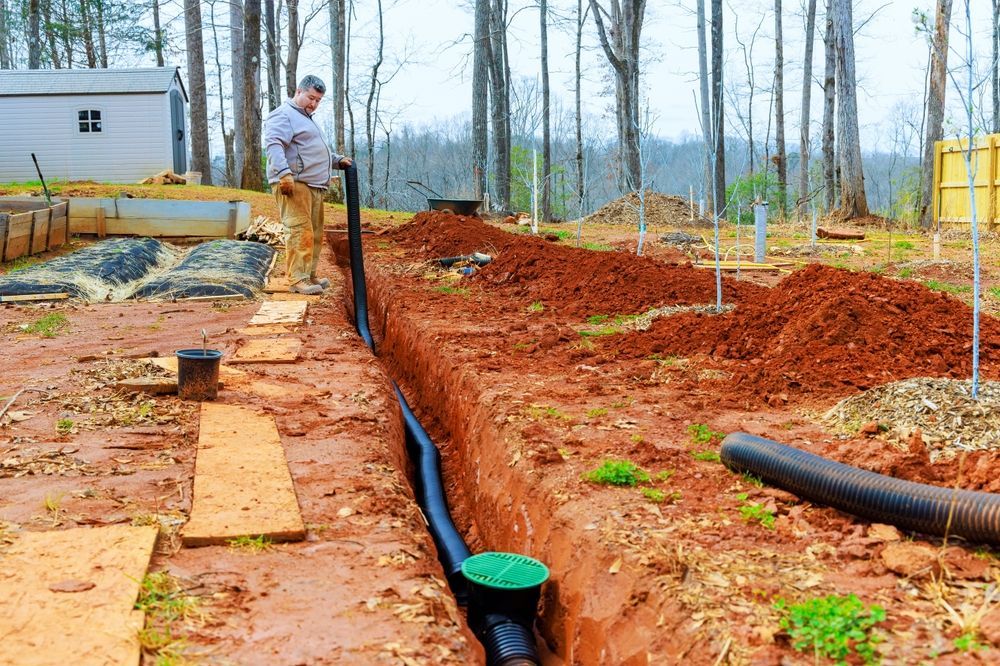
Solutions involve cutting drainage swales that intercept and redirect surface flow, installing subsurface drain lines that capture groundwater before it surfaces, and grading terrain to establish positive slope away from buildings. French drains channel water through gravel-filled trenches toward discharge points, while catch basins collect surface runoff and route it through buried pipe networks to appropriate outlets.
Schedule a property evaluation to identify specific drainage concerns and design solutions that address water sources affecting your site.
Installation begins with identifying water sources and flow paths, then designing conveyance routes that move runoff to safe discharge locations without creating erosion or flooding downstream. Trenching establishes pathways for perforated drain pipe surrounded by washed rock that filters sediment while allowing water entry, with slopes calculated to maintain flow velocity without pipe clogging. Surface grading creates shallow channels or broad swales that handle sheet flow during heavy precipitation, directing water around rather than through problem areas.
Once systems are operational, foundation perimeters stay dry because subsurface drains lower the water table around structures, surface runoff follows predictable paths toward designed outlets rather than pooling randomly, and previously saturated yard sections firm up as water no longer accumulates. Erosion stops in areas where concentrated flow previously carved channels, and basements or crawl spaces remain dry during spring melt events that formerly caused flooding.
Effective drainage also requires outlet planning, since water must discharge to locations that can handle volume without creating new problems—typically existing drainage courses, roadside ditches, or dry wells in permeable soil. Systems include cleanout access points for future maintenance when sediment accumulation reduces flow capacity over time.
Questions Before Starting Your Project
Water management projects require site-specific solutions based on soil permeability, terrain slope, and the volume and source of problem water.
What causes drainage problems on Naches properties?
Seasonal snowmelt combined with clay soil layers that restrict percolation creates conditions where runoff accumulates rather than infiltrates, particularly on sites graded during initial construction without adequate slope or subsurface drainage installation.
How deep are drainage lines installed?
Perimeter drains around foundations sit at footing level or slightly below, typically four to six feet deep, while yard drainage lines run eighteen to thirty inches below surface depending on frost depth and discharge elevation requirements.
When do drainage problems become urgent?
Address drainage immediately when water enters living spaces, when foundation cracks show moisture-related movement, or when surface erosion threatens structures, utilities, or property boundaries with progressive damage.
What material is used in French drain construction?
Drains use four-inch perforated pipe surrounded by three-quarter-inch washed drain rock that prevents sediment clogging while maintaining void space for water flow, with filter fabric wrapping that blocks soil particle entry from surrounding ground.
How is drainage effectiveness verified after installation?
Systems are tested during installation by running water through pipes to confirm positive slope and proper discharge, with surface grading checked using string lines or laser levels to ensure continuous fall away from structures toward collection points.
All Valley Land Management & Excavation evaluates water sources and designs drainage systems that protect structures and restore property usability. Contact All Valley Land Management & Excavation to discuss water management options specific to your Naches property conditions.