Surfaces That Direct Water Correctly
Grading and Site Preparation in Naches for properties requiring drainage correction, building pad leveling, or slope stabilization
Grading reshapes ground surfaces to control water movement, create level building areas, and prevent erosion on slopes where natural terrain directs runoff toward structures or creates standing water in low spots. You notice grading is needed when water pools near foundations after storms, driveways develop washout channels, or construction plans require level pads where none exist. All Valley Land Management & Excavation adjusts site elevations and slope angles in Naches to match engineered specifications or correct existing drainage failures that threaten property integrity.
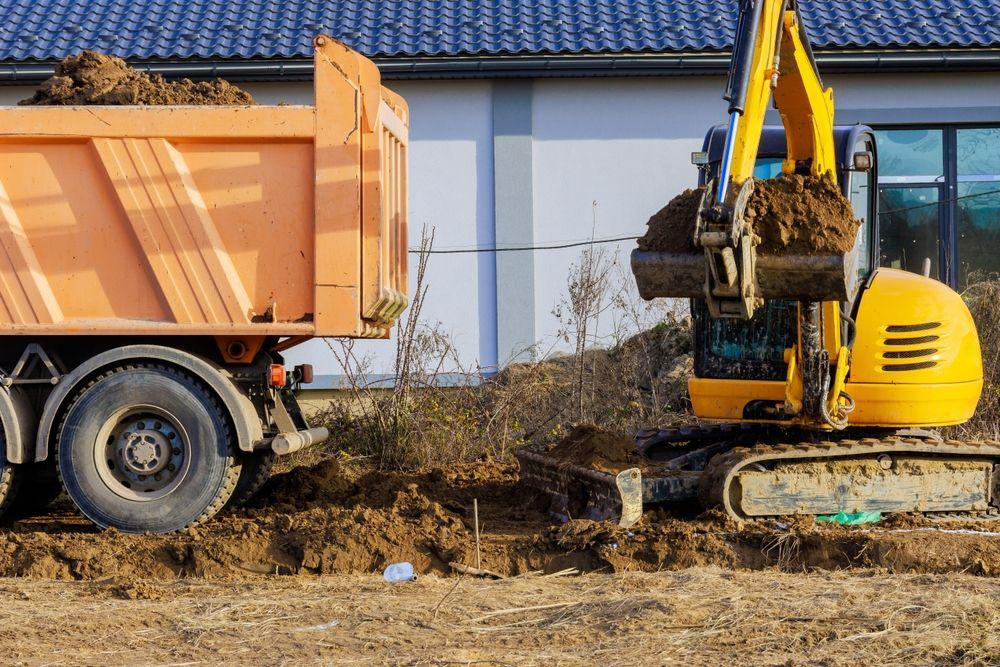
The work involves cutting high areas and filling low sections to establish continuous slopes, compacting fill material in controlled layers, and fine-grading surfaces to within tolerance ranges specified by engineers or building codes. Equipment passes create density in fill zones that prevents future settling, while laser-guided blade control maintains slope percentages that move water at velocities that avoid both ponding and erosive flow.
Arrange an evaluation to identify drainage patterns and grading solutions for problem areas across your site.
Site preparation starts with topsoil stripping and stockpiling, then progresses through rough grading that establishes major elevation changes and finish grading that refines surfaces to final contours. Cut and fill volumes are balanced when possible to minimize material import or export costs, with compaction performed in lifts no thicker than eight inches to achieve density standards that support structures or pavement. Grade stakes and string lines guide equipment operators to precise elevations, with continuous checking against benchmark elevations throughout the process.
After grading, water flows in predictable directions away from buildings, driveways no longer channel runoff into concentrated streams that erode surfaces, and building pads sit level within tolerances that prevent structural stress. Low spots that previously held standing water disappear because the entire site drains toward designed outlets, and slopes remain stable without slumping because compacted fill resists saturation and erosion during heavy precipitation events common in the Naches valley.
Grading also includes subgrade preparation for concrete or asphalt placement, with surfaces brought to elevations that account for pavement thickness and base material depth. Some projects require imported fill material when existing soil lacks stability, while others involve only redistribution of on-site material to achieve design grades.
Common Questions About This Service
Grading decisions affect long-term site performance, making advance planning and execution standards critical to avoiding future problems.
What slope percentage is required for proper drainage?
Finish grades typically range from two to five percent away from structures, steep enough to move water without ponding but shallow enough to prevent erosive velocities that wash away topsoil or create channels.
How is fill material compacted during grading?
Material is spread in eight-inch lifts and compacted using vibratory rollers or plate compactors, with moisture content adjusted to optimize density since overly dry or saturated soil resists compaction and leads to future settling.
When should topsoil be replaced after grading?
Topsoil goes back on after all subsurface work and final grade verification, typically just before landscaping installation, to avoid recontamination with subsoil and prevent erosion of exposed finish surfaces during construction delays.
What determines whether a site needs imported fill material?
Import becomes necessary when cut material volume falls short of fill requirements, when existing soil contains organic matter or clay that won't compact adequately, or when specifications call for engineered fill with specific bearing capacity.
How does grading interact with existing utility lines in Naches?
All underground utilities are located and marked before grading begins, with grade adjustments planned to maintain required cover depths over pipes and cables while achieving surface drainage objectives around those fixed constraints.
All Valley Land Management & Excavation designs and implements grading plans that address both immediate construction needs and long-term drainage performance. Request a site consultation to review elevation changes and material requirements for your grading project.